5 Puzzles to Train Calculation Every Day
Improving at chess doesn’t require hours of memorizing openings it requires building your calculation muscles. Just like physical training, even a small amount of daily practice produces big results over time.
Here are five hand-picked puzzles designed to strengthen your tactical vision, force your brain to think ahead, and help you find winning ideas faster during real games. Try solving each one without moving the pieces visualize the lines, spot forcing moves, and calculate until the end.
Puzzle 1: Fork Tactics Win Material
Theme: Knight Fork
Difficulty: Easy
White to move and win material.|
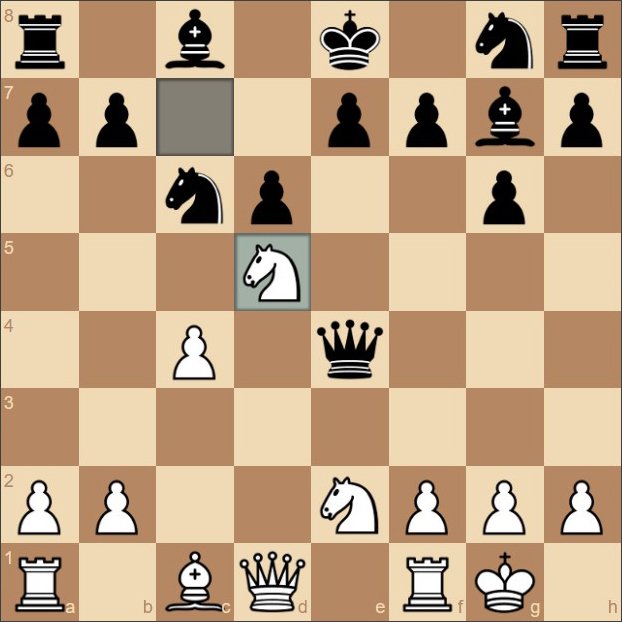
Look for:
- Checks
- Attacks on multiple pieces
- Forcing moves the opponent must answer
A knight placed on the right square can attack two valuable targets at once. This pattern repeats in thousands of real games, so training it makes your calculation sharper and faster.
Hint: The winning square is defended by your pawn.
Puzzle 2: The Hidden Pin
Theme: Pin & Exploitation
Difficulty: Medium
Black has a powerful piece pinned, and White can use this to win material immediately.
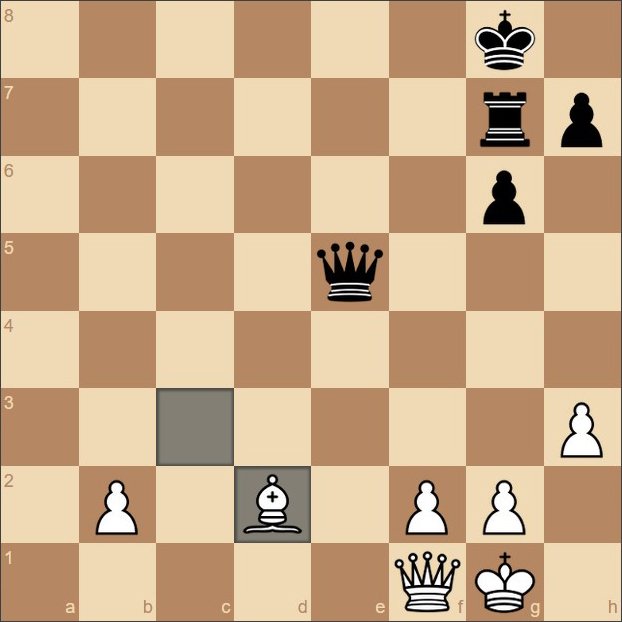
Key ideas:
- Identify the pinned defender
- Look for undefended squares
- Strike before the opponent unpins
Pins are lethal when you combine them with forcing attacks that your opponent cannot ignore.
Hint: The winning move is a forcing attack on the pinned piece.
Puzzle 3: Winning with a Discovered Attack
Theme: Discovery
Difficulty: Medium/Hard
White can create a discovered attack that forces material gain or a decisive positional edge.
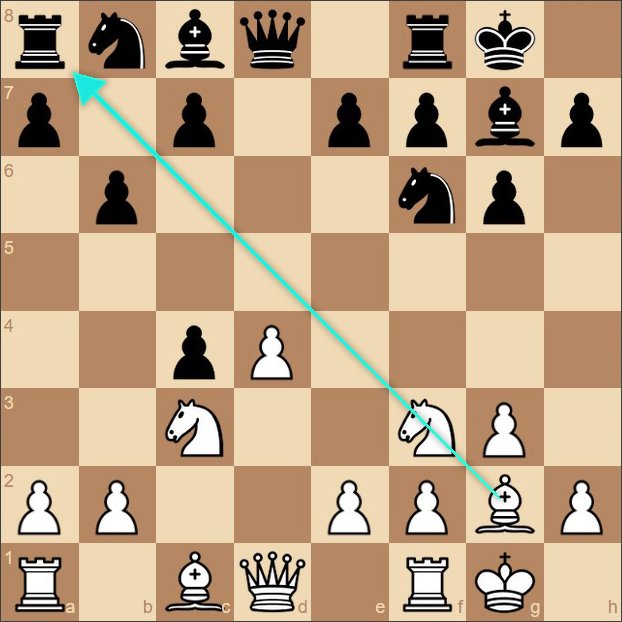
Think about:
- Moving the piece that reveals the attack
- Choosing the most forcing continuation
- Considering checks first
Discovered attacks are especially strong because one move creates two threats at the same time your opponent can’t stop both.
Hint: Look for a forcing move that reveals the attack.
Puzzle 4: Decoy and Deflection
Theme: Decoy / Removing the Defender
Difficulty: Hard
Black has an important defender protecting a key square. If White can lure or force that defender away, the position collapses.
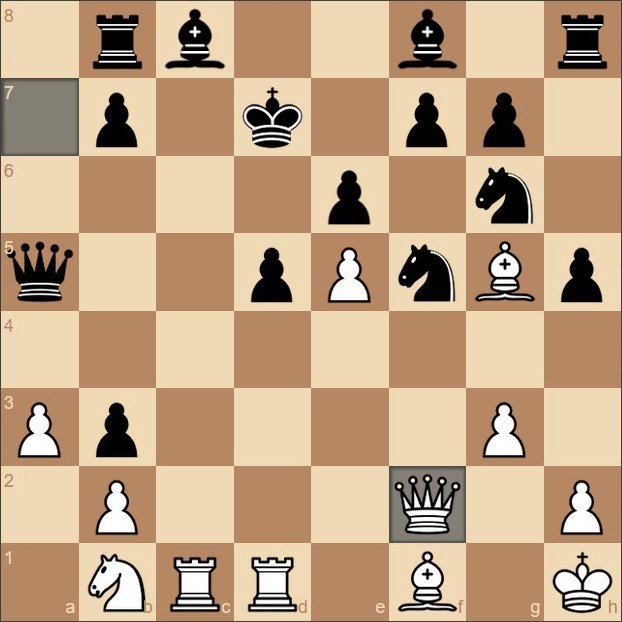
Try to:
- Identify which piece is defending the critical square
- Find a move that forces it to leave
- Calculate the resulting tactic to the end
Deflection is a classic grandmaster technique that instantly wins games when the opponent’s pieces are overworked.
Hint: The winning move forces the defender to capture something.
Puzzle 5: Mate in 3, Calculation Test
Theme: Forced Mate Sequence
Difficulty: Hard
White must find a precise three-move sequence that leads to checkmate.
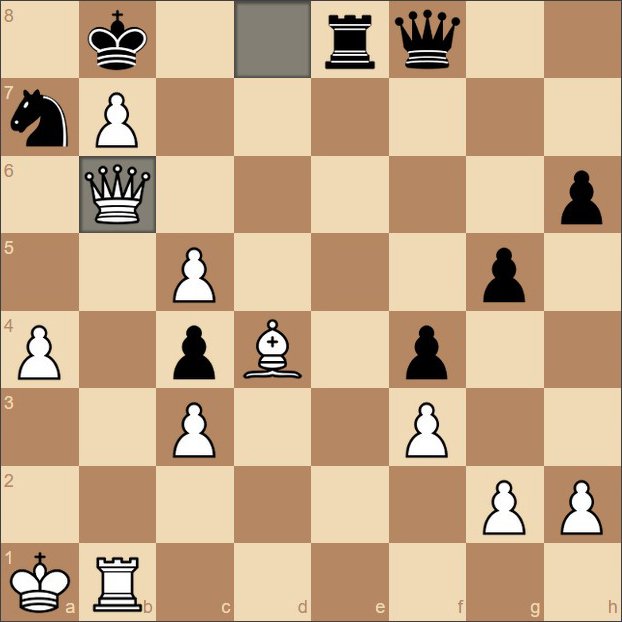
Focus on:
- Forcing checks
- Eliminating escape squares
- Visualizing all branches
This puzzle trains pure calculation no guessing, no shortcuts. Solve it slowly and methodically.
Hint: Every winning line begins with a forcing check on the king.
Common Calculation Mistakes to Avoid
Many players fail to improve their calculation because they move too quickly to the first idea that looks attractive. In real games, the first idea is often not the best one. Strong calculation requires discipline: identify forcing moves first, calculate each line carefully, and only then choose the best continuation.
Another frequent mistake is stopping the calculation after a good-looking result without checking the opponent’s best defense. Always assume your opponent will find the strongest reply. This habit alone will dramatically reduce blunders and missed tactics.
Finally, players sometimes ignore quiet defensive resources. Not every tactic is refuted by a capture or check. A simple king move or retreat can completely change the position, and learning to spot these ideas is a key part of strong calculation.
Why Daily Puzzle Training Improves Your Real Games
Solving calculation puzzles every day builds more than tactical skill. It improves visualization, patience, and confidence at the board. Over time, your brain begins to recognize common patterns instantly, reducing the amount of raw calculation needed during a real game.
Daily training also improves time management. Players who regularly calculate forcing lines are less likely to panic in critical positions and more likely to trust their analysis. This is especially important in blitz and rapid games, where decisions must be made under time pressure.
Even 10–15 minutes of focused puzzle solving per day can lead to noticeable improvement within weeks. Consistency matters far more than solving a large number of puzzles in one session.
How to Use These Puzzles Every Day
- Solve all five puzzles without moving pieces.
- Calculate lines fully, don’t stop after the first move.
- Use the engine afterward to check accuracy.
- Repeat similar themes daily to build pattern recognition.
Consistent practice is the key. Even solving just five puzzles a day dramatically improves your tactical sharpness and overall chess strength.