Blunders vs Mistakes: How to Spot Them Before Playing
In chess, a mistake usually makes your position worse… but a blunder often loses material or allows a forced tactic right away. The good news: most blunders are avoidable with a simple habit before every move.
Want to double-check your moves? Open Chess Next Move Calculator
Blunder vs Mistake: The Simple Difference
Here’s an easy way to think about it:
- Mistake = you miss a stronger move, lose an advantage, or weaken your position.
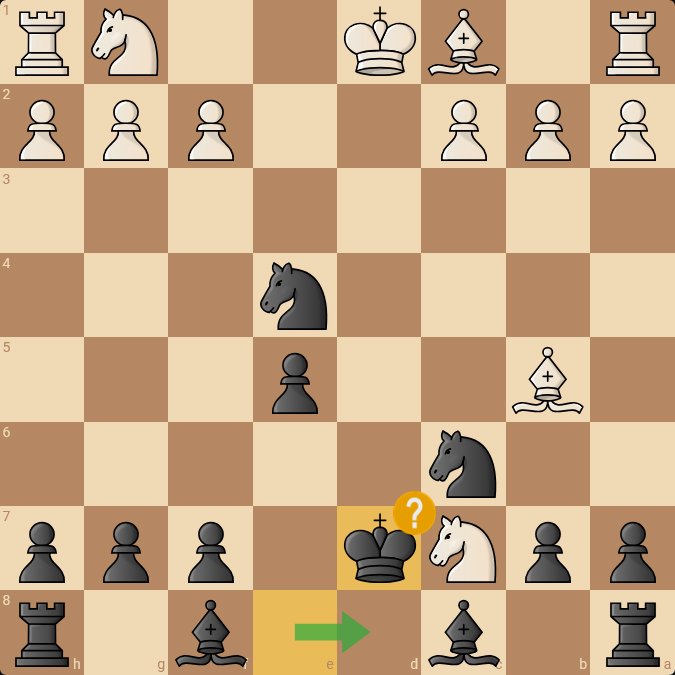
- Blunder = you miss a tactical threat and lose material or get checkmated quickly.
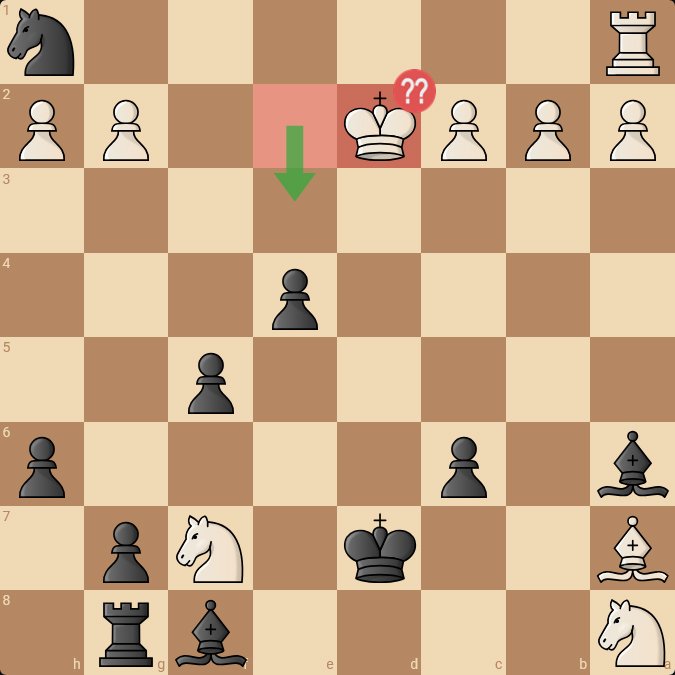
A mistake might turn a winning position into an equal one. A blunder can turn an equal game into a losing one instantly.
The #1 Reason People Blunder
Most blunders happen because players only look at their own plan and forget to ask: “What does my opponent want?”
Before you play any move, take 5 seconds and do one quick scan:
- Is my king safe?
- Is any piece hanging?
- Did I just allow a tactic (fork/pin/skewer)?
The “Blunder Check” You Should Do Before Every Move
Use this mini-checklist every time (it becomes automatic with practice). Think of it as your anti-blunder shield:
- 1) Checks: Does my opponent have a check after my move?
- 2) Captures: Can my opponent win material by capturing something?
- 3) Threats: Is there a direct threat like a fork, pin, skewer, or mate?
This is sometimes called “CCT” (Checks, Captures, Threats). It’s simple, fast, and it prevents many one-move blunders.
Common Blunders and How to Spot Them
Here are the most common blunders and what to look for:
- Hanging a piece: You move a piece and forget it was defended. Always re-check attackers/defenders after moving.
- Forks: Knights are the biggest fork machines. Watch for knight jumps that attack two valuable targets.
- Pins and skewers: Lines open suddenly. If you move a pawn, ask: “What line did I open?”
- Back-rank mates: If your king is trapped by its own pawns, checks on the back rank can end the game instantly.
- Overlooking discovered attacks: A piece moves away and reveals an attack from a rook/bishop/queen behind it.
If you often lose games by “one move,” it’s usually one of these patterns.
Mistakes: How They Happen and How to Reduce Them
Mistakes are more subtle. They happen when you choose a move that is “okay” but not best. To reduce mistakes, do this:
- Generate 2–3 candidate moves (don’t play the first move you see).
- Compare them quickly using the same CCT checklist.
- Pick the move that improves your worst piece or creates a threat without allowing counterplay.
In many positions, the best move isn’t a tactic — it’s a strong improvement move.
A Simple 30-Second Routine Before You Play
If you want a super practical habit, do this every move (especially in rapid/classical):
- 10 seconds: What does my opponent threaten right now?
- 10 seconds: Checks, captures, threats for both sides.
- 10 seconds: Choose between your best 2 candidate moves.
This routine alone can increase your consistency more than learning opening lines.
Train This Skill Using Chess Next Move
The best way to improve is to guess first, then verify. Here’s a fast training method:
- Pick a position from your last game
- Before moving, do the CCT blunder check
- Choose your move
- Then use the calculator to compare your choice
- Repeat for 5 positions
Ready to train? Open the Play Page
Why Even Strong Players Still Blunder
Blunders are not limited to beginners. Even strong club players and grandmasters blunder, especially under time pressure or emotional stress. Fatigue, overconfidence, and distraction all increase the likelihood of overlooking simple tactical threats.
A common cause is “tunnel vision,” where a player focuses too much on one plan and stops scanning the entire board. This is why maintaining a consistent pre-move routine is more important than raw chess knowledge.
Understanding that blunders are part of the game helps players stay calm and recover faster instead of spiraling after a single mistake.
How Time Pressure Changes Decision Making
As the clock runs down, the brain shifts from calculation to instinct. While intuition can be powerful, it is also more prone to errors when tactical danger is present. This is why many blunders happen in blitz and rapid games.
To reduce this risk, simplify positions when possible and avoid unnecessary complications when you are low on time. Choosing a safe, solid move is often better than chasing a perfect one.
Turning Mistakes Into Learning Opportunities
Every mistake contains useful information. After a game, instead of asking “Why did I lose?”, ask “At what moment did my evaluation change?” Identifying this turning point helps you focus on the decision that mattered most.
Use engine analysis sparingly: first try to understand the idea behind the better move, then check the engine’s evaluation. This approach leads to long-term improvement rather than dependency.
Quick Summary
- Blunders lose material or allow forced tactics fast.
- Mistakes are weaker choices that slowly worsen your position.
- Before every move, check Checks, Captures, Threats for both sides.
- Train by guessing first, then verifying with analysis.
If you apply this for a week, you’ll be shocked how many games you stop losing “for no reason.”